Electronics
Lead Time Pulse
A monthly read on where electronics lead times are actually tightening, and where they are not.
Every month I track lead-time conditions across the major component categories and score each one from stable to critical. You get the trend visual and my notes, built for engineering, sourcing, product, and supply chain teams.
Get the monthly Pulse
The category trend visual and my notes, straight to your inbox.
One email a month.
Every category, scored every month
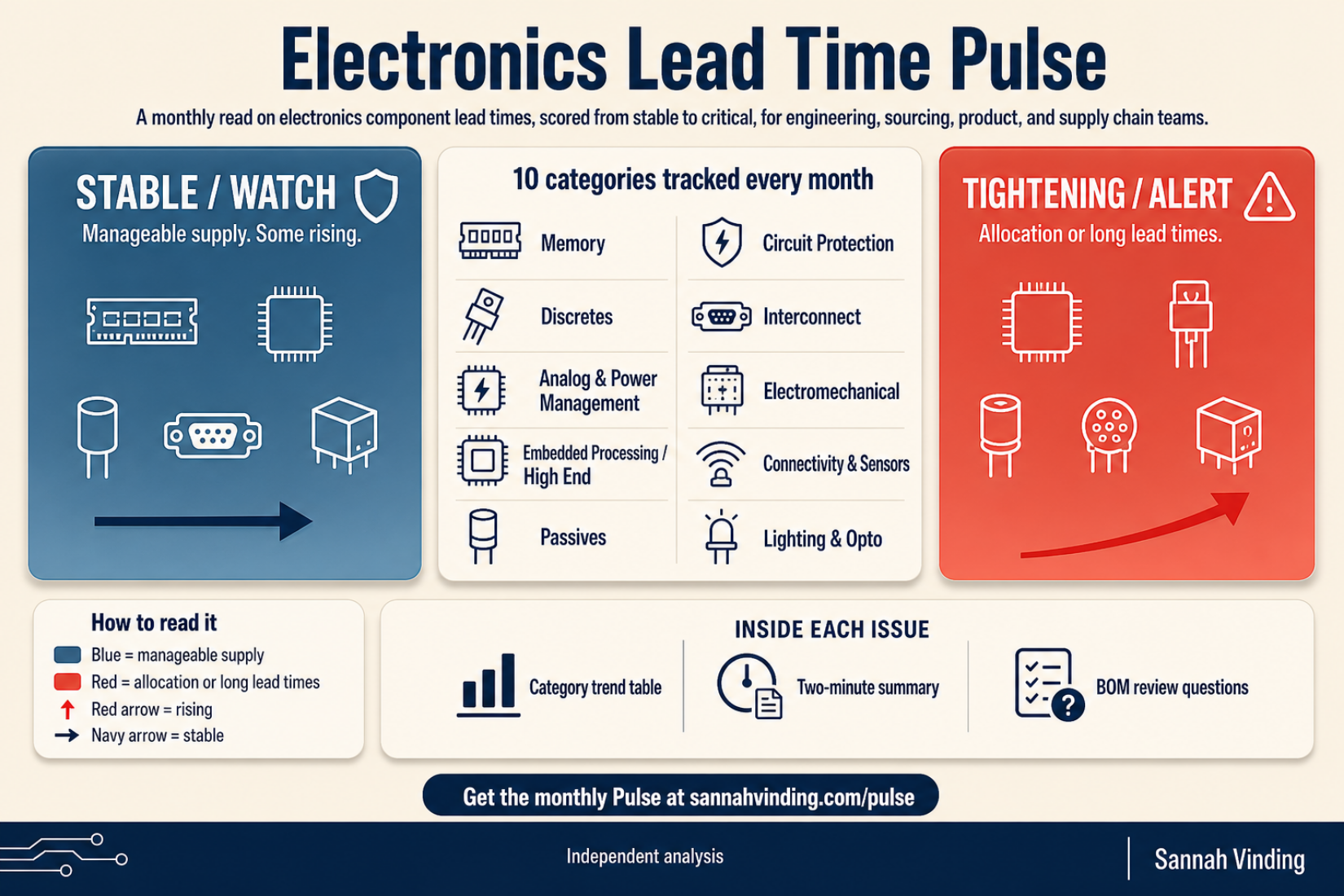
Ten component categories, scored each month for lead time and pricing, split between stable and watch and tightening and alert. The legend shows how to read it, and every issue includes the trend table, a two-minute summary, and BOM review questions.
What is inside each issue
The category trend chart
A clear month-by-month view of every major component category, scored from stable to critical, so you can see direction, not just a single snapshot.
The two-minute read
What moved this month and why, in a few lines. No noise, just the signal you can act on against your own bill of materials.
Tightening and holding
Which categories and sub-families are under pressure, and which are still manageable, so you know where to look first.
Questions for your BOM
The specific questions to bring to your team, from longest-qualified parts to limited alternates to exposure that could change customer commitments.
What the data is showing
Sample issue
The electronics market has been splitting through 2026, and it matters which side of the split your BOM sits on.
Month after month, the data tells a consistent story. Pressure keeps building around memory, power discretes, specialty passives, high-end embedded, and power analog, while many broader categories remain relatively stable and cost keeps rising almost everywhere.
That does not mean the whole market is tight. It means the risk is specific, and it has been building in the same places since the start of the year.
The question is not just what average lead times are doing. It is where your longest-qualified parts sit, where you have limited alternates, and which categories would change your customer commitments if lead times stretched.
Built for the teams closest to the BOM
Get the monthly Pulse
Join engineering and sourcing teams who read the market at the part level, not the headline.
Get the monthly Pulse